From Diesel to Decarbonized: Transforming Operations at the Port of Baltimore
Charting a Course to Net Zero
Providing forward-thinking environmental solutions to support our core mission of increasing waterborne commerce through Maryland to generate economic benefits drives us at the Maryland Port Administration (MPA).
We are committed to reducing air pollution and greenhouse gas (GHG) emissions, identifying opportunities for energy resiliency, and improving air quality in neighborhoods located near the Port.
We are investing in our neighboring communities, and as part of our efforts to reduce air pollution and protect near-port communities, we invite you to share your input by completing our
Clean Ports Community Survey
(click here). Your feedback is crucial in helping us to set priorities and communicate progress as we work to reduce emissions and improve air quality.
A Blueprint for Cleaner Air
The Port of Baltimore aims to:
- Reduce diesel pollution
- Deploy zero-emission equipment
- Improve air quality in port-adjacent communities
- Advance community collaboration and workforce development
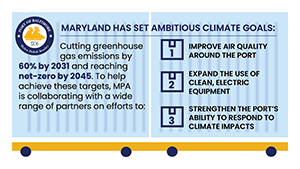 |
MPA is eager to become the first Maryland state agency to achieve full net-zero status by drastically reducing our greenhouse gas emissions and offsetting the remaining emissions. We are currently developing an Air Quality Improvement Strategy with funds through the
U.S. Environmental Protection Agency’s Clean Ports Program.
Explore our Blueprint. Click any button below to learn about how we’re reducing emissions, strengthening our workforce, and building a cleaner, more sustainable Port of Baltimore.
Zero-Emission Equipment Deployment: On the Path to Decarbonization
As part of our commitment to reducing air pollution and protecting near-port communities, MPA is deploying cutting-edge zero-emission equipment across port terminals, with an immediate focus on the Dundalk Marine Terminal. This includes electric short distance drayage trucks, cargo-handling equipment, and charging infrastructure designed to eliminate harmful diesel emissions. These upgrades not only improve air quality for nearby neighborhoods but also support a cleaner, quieter, and more sustainable port environment.
- 27 Drayage Trucks
- 193 Cargo Handling Equipment
- 151 EV Supply Equipment
- Battery Energy Storage System with Microgrid
- Electrical Infrastructure Upgrades
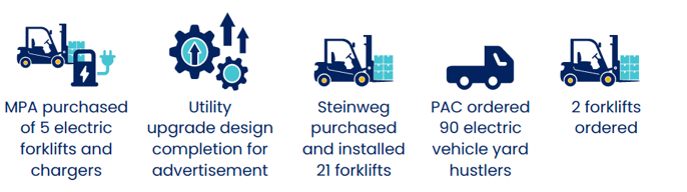
Charging Ahead: Clean Ports Grant Year One Achievements
Port Energy & Emissions Planning: Emissions Reduction Strategy
MPA’s carbon reduction efforts will prioritize zero-emission strategies to improve air quality and community health. This will include electrification and use of renewable energy to achieve federal and state GHG and other emission reduction targets. MPA will analyze various technologies to incorporate additional alternative energy opportunities and develop a framework to address emissions from direct MPA activities, contractors, tenants, and visitor activities at MPA-owned marine terminals and port facilities, the World Trade Center (WTC), and MPA’s four dredged material containment facilities (DMCFs). MPA is committed to supporting, identifying and providing key opportunities to maximize alternative energy sources.
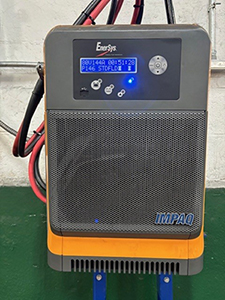
EV charging units will support electric equipment.
Partnering with Our Neighbors: Community Engagement Strategy
MPA is deeply committed to working hand-in-hand with near-port communities to improve air quality, promote environmental health, and ensure fair access to the benefits of port decarbonization. Through ongoing engagement, listening sessions, and collaborative planning, MPA is building lasting partnerships that reflect the voices and priorities of those most impacted by port operations. Together, we’re shaping a cleaner, healthier future, one that supports both community well-being and sustainable growth.
MPA’s Clean Ports Community Engagement Plan will provide a reenvisioned framework for meaningful stakeholder input, participation, and awareness with respect to the overall port initiatives as well as planning, design, construction, and performance reporting for the Clean Ports Grant project. Our initial focus areas are near Dundalk Marine Terminal, our busiest terminal.
Empowering Port Workers: Workforce Analysis
Maryland Department of Labor will conduct a Climate and Air Quality Measure Workforce Impact Analysis to evaluate the potential impact of equipment electrification to the existing applicable trades and positions within the Maryland workforce and potential impacts to the local economy to ensure opportunities are provided that allow accessibility to new skilled positions. We will identify opportunities to increase job accessibility and skills, as well as certifications and training needed for advancement. The analysis will assist in developing a strategy to reduce potential workforce gaps, implement training programs and create additional employment partnerships focused in communities near the port.
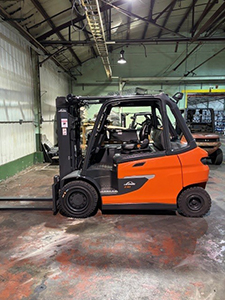
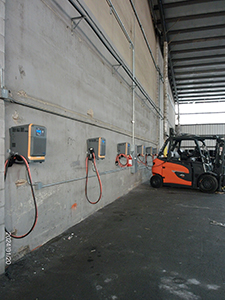
New EV forklift will replace diesel powered units.

Environmental and Community Benefits: Our Impact
Operating in the heart of the Chesapeake Bay, MPA recognizes its responsibility to protect this vital natural resource. MPA is modernizing operations, reducing emissions, and positioning the Port to contribute meaningfully to Maryland’s long-term climate and energy goals.
Our approach balances economic growth, community well-being, and environmental health, because we believe that sustainability, prosperity, and equity go hand in hand.
Resources and Additional Information
To read all the MPA's incredible sustainability efforts, click on the reports below:
Learn more about the
US EPA’s Ports Initiative &
Overview of US EPA’s Clean Port Program.
Come See What We’re Up To
We host an annual air quality tour of our terminal. Sign up here.
We Want to Hear From You
Your engagement is critical to our success. We have many ways to be in touch – take our
Clean Ports Community Survey, send us a note, or follow us on social media.
We look forward to connecting!
Email:
MPA Clean Port
Subscribe to email newsletters with the latest information about how port leaders, employees, tenants, and community volunteers are working together to meet environmental standards and deliver excellent business results.

